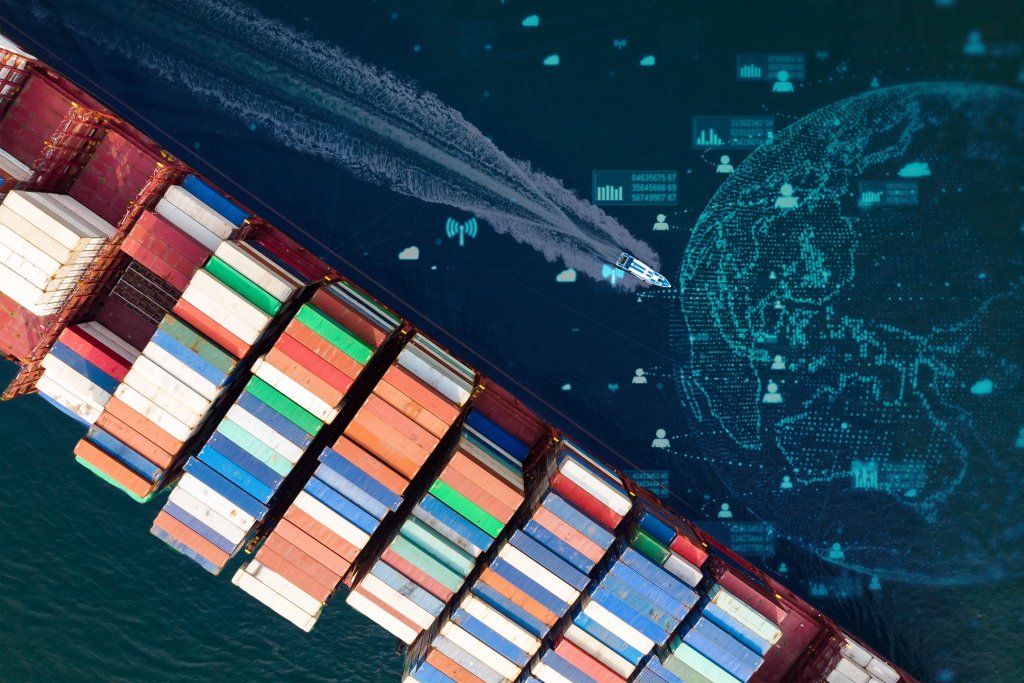
The maritime and shipping sector has become increasingly digitized in recent years by using cutting-edge technologies to cut costs and improve efficiency. Yet, this digital transformation has also left these industries open to cybercrime and attacks. Since they form an integral part of world trade and transport, any disruption in maritime life can have immense implications for the global economy. Therefore, identifying the current cyber-attack risks, predicting them, and adopting strong mitigation measures are essential for companies in this area.
Cyber attacks on the shipping sector encompass a variety of strategies, such as ransomware, phishing, data breaches, and supply chain attacks, to name a few. These attacks can interrupt the functioning of the ships, leak private information, and even threaten maritime safety and security.
Perhaps the most alarming threat involves cyber-enabled tampering with vessel navigational systems. In 2017, the NotPetya malware outbreak proved how weak shipping companies’ IT infrastructure can be, causing havoc on global maritime trade. In addition, the rising interconnectivity of onboard equipment and the growth of IoT devices have broadened the attack surface, which gives attackers even more avenues to take advantage of.
The maritime industry’s reliance on legacy systems and crew members’ ignorance about cybersecurity compound the situation. Third-party vendor and supplier weaknesses also come into play, such as the hack in 2018 of a major shipping line’s booking system, which led to business disruptions and losses.
With the advancement of technology, cyber threats aimed at the maritime industry are set to grow ever more sophisticated and ubiquitous. As autonomous and unmanned vessels and maritime systems become available, threats to physical and environmental harm via cyber-attacks become more serious. Moreover, applying Artificial Intelligence (AI) and Machine Learning (ML) to maritime operations opens up new attack tools like AI-powered social engineering and adversarial ML.
Furthermore, geopolitics and state-sponsored cyber-warfare pose new risks for the marine industry. In cyber-espionage or sabotage operations, nation-state actors can interfere with supply chains and achieve strategic advantage by utilizing critical infrastructure (ports, shipping channels).
Firms must be proactive and layering cybersecurity to effectively mitigate cyber threats in the maritime sector. Some key mitigation strategies include:
- Risk Assessment and Management: Evaluate risk in detail to uncover threats and prioritize cybersecurity investments depending on assets and business impact.
- Cybersecurity Awareness Training: Conduct periodic training and awareness activities for crew members and shore-based staff to train them on commonly encountered cyber threats and measures for risk reduction.
- Implementing Security Controls: Enforce effective cybersecurity, firewalls, intrusion prevention systems, and encryption techniques to guard onboard devices and networks from intruders and malware.
- Vendor Risk Management: Assessing the cybersecurity readiness of third-party vendors and suppliers and establishing contractual requirements for security controls and incident response capabilities.
- Incident Response Planning: Establishing and continuously validating incident response plans to plan a coordinated and successful cyber incident containment, mitigation, and recovery response.
- Regulatory Compliance: Continuously up-to-date on cybersecurity rules and standards, such as IMO maritime cybersecurity guidance, and implementing compliance with industry standards.
In conclusion, cyber-attacks threaten the shipping and maritime industry, undermining global supply chains’ security, safety, and reliability. Companies will need a proactive and comprehensive cyber security strategy to successfully mitigate these risks, including risk assessment, employee training, technical controls, vendor management, incident response, and regulatory compliance. By putting cybersecurity investments in place now, shipowners can build cyber-security defenses against attacks and secure their businesses in an increasingly digital and connected world. In conclusion, cyber-attacks pose significant risks to the maritime and shipping industries, threatening global supply chains’ safety, security, and reliability. To effectively mitigate these risks, companies must adopt a proactive and holistic approach to cybersecurity, encompassing risk assessment, employee training, technological controls, vendor management, incident response, and regulatory compliance. By investing in cybersecurity measures now, maritime organizations can enhance their resilience to cyber threats and safeguard their operations in an increasingly digitalized and interconnected world.
References:
- Buehler, Matt. “Navigating the Digital Risk: Cybersecurity in the Maritime Sector.” World Economic Forum, 2020.
- International Maritime Organization. “Guidelines on Maritime Cyber Risk Management.” IMO, 2018.
- Kim, Changhoon, et al. “Cyber Threats and Vulnerabilities in the Maritime Transportation System.” IEEE Transactions on Intelligent Transportation Systems, vol. 20, no. 11, 2019, pp. 4229-4243.
- Perelman, Liron, et al. “Cybersecurity in the Maritime Sector: A Comprehensive Analysis.” Journal of Maritime Research, vol. 17, no. 1, 2020, pp. 1-18.
- Ponemon Institute. “2019 State of Cybersecurity in Small and Medium-Sized Businesses (SMBs).” Ponemon Institute LLC, 2019.

 The Compassionate CISO